
Clean Based on
Demand.
Not Just a Schedule.
Azolla IoT uses real-time occupancy and usage data to help facilities teams clean where and when it is needed. Trigger cleaning based on actual demand, optimise resources and maintain consistently high standards.
Cleaning
Triggers
Resources

THE PROCESS
From Usage Data to Cleaning Action
Azolla turns real-time space usage into automated, demand-led cleaning workflows
Detect
IoT sensors capture real-time occupancy and usage data across your facilities.
Analyse
Azolla analyses usage levels and identifies when defined cleaning thresholds are reached.
Trigger
Cleaning requirements automatically trigger alerts or tasks based on actual demand.
Act
Cleaning teams receive the right task for the right location, helping resources respond where needed.
Optimise
Usage and cleaning data provide insight to refine schedules, resources and service delivery.
REAL-WORLD IMPACT
How On-Demand Cleaning Delivers Value
Use real-time demand to target cleaning resources where they are needed most

Clean Based on Actual Usage
Trigger cleaning when usage thresholds are reached instead of relying solely on fixed schedules.
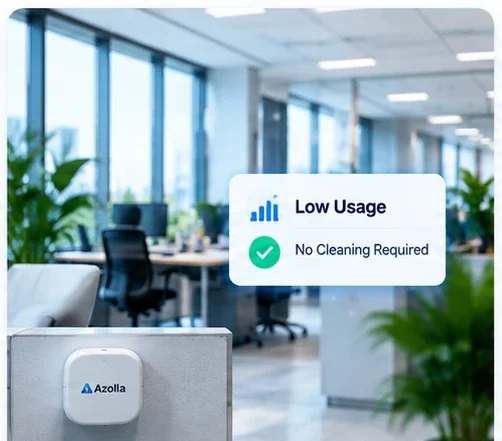
Avoid Unnecessary Cleaning
Identify low-use spaces and focus cleaning resources on areas that have actually been occupied.
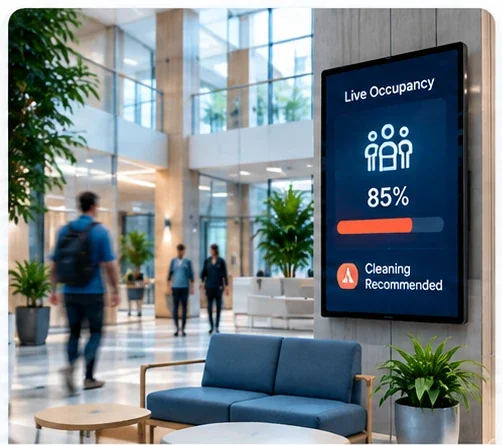
Respond to Demand in Real Time
Use live occupancy data to identify busy areas and help cleaning teams respond where demand is highest.
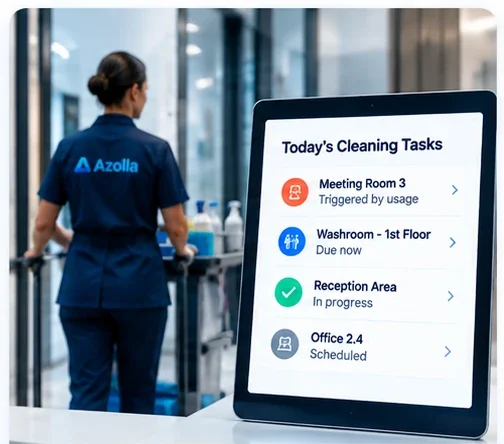
Optimise Teams & Resources
Use demand and task data to improve cleaning schedules, allocate resources and monitor service delivery.
CONNECTED WORKFLOWS
Turn Real-Time Usage Into Cleaning Action
Connect occupancy data with Azolla to automatically identify cleaning demand, create tasks and direct teams to the spaces that need attention
Occupancy Sensor
Captures real-time space usage and footfall.
Usage Threshold
Defined usage levels identify cleaning demand.
Azolla
Converts sensor data into an operational workflow.
Cleaning Task
A cleaning requirement is automatically created.
Cleaning Team
Teams are directed to the spaces that need attention.
FREQUENTLY ASKED QUESTIONS
On-Demand Cleaning FAQs
Learn how Azolla uses IoT occupancy data to support smarter, demand-led cleaning across your facilities.
IoT on-demand cleaning uses real-time occupancy and space usage data to help determine when and where cleaning is required. Instead of relying solely on fixed schedules, facilities teams can use actual demand to prioritise cleaning resources across their buildings.
IoT sensors monitor occupancy, footfall or space usage. When a defined usage threshold is reached, Azolla can use that information to identify a cleaning requirement and support a demand-led workflow. Cleaning teams can then focus on the locations where attention is actually needed.
Yes. Occupancy and footfall data can be connected with Azolla so that defined usage thresholds trigger alerts or cleaning workflows. This helps turn live sensor data into an operational action, allowing cleaning teams to respond to actual building usage rather than waiting for the next scheduled clean.
Yes. Demand-led cleaning does not have to replace every scheduled cleaning activity. Azolla can help facilities teams combine planned cleaning routines with real-time usage information, allowing fixed schedules to remain in place where required while additional tasks are prioritised according to demand.
On-demand cleaning can be particularly useful in washrooms, offices, meeting rooms, shared areas and other high-traffic facilities where usage can vary significantly throughout the day. It can also support multi-site facilities teams that need better visibility of cleaning demand across multiple locations.
By providing visibility of actual space usage, on-demand cleaning can help facilities teams avoid repeatedly cleaning low-use areas while directing resources towards busier locations. This can support more efficient labour allocation, better scheduling and smarter use of cleaning resources while helping maintain service standards.
Ready to Make Cleaning Demand-Led?
See how Azolla IoT can help your facilities team use real-time occupancy data to trigger cleaning, optimise resources and respond to actual demand.
Cleaning
Triggers
Scheduling
Resources
